
A small colony
of half a million bees
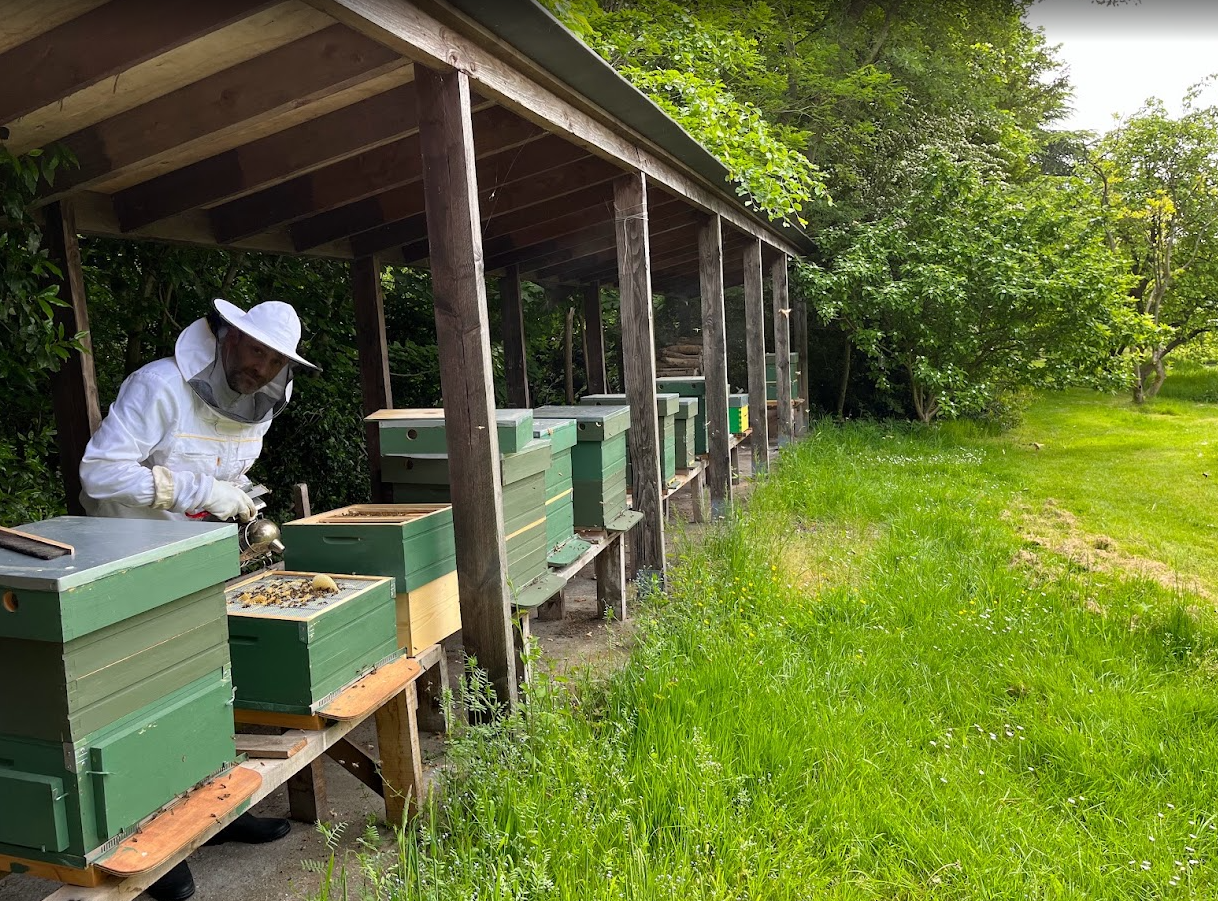
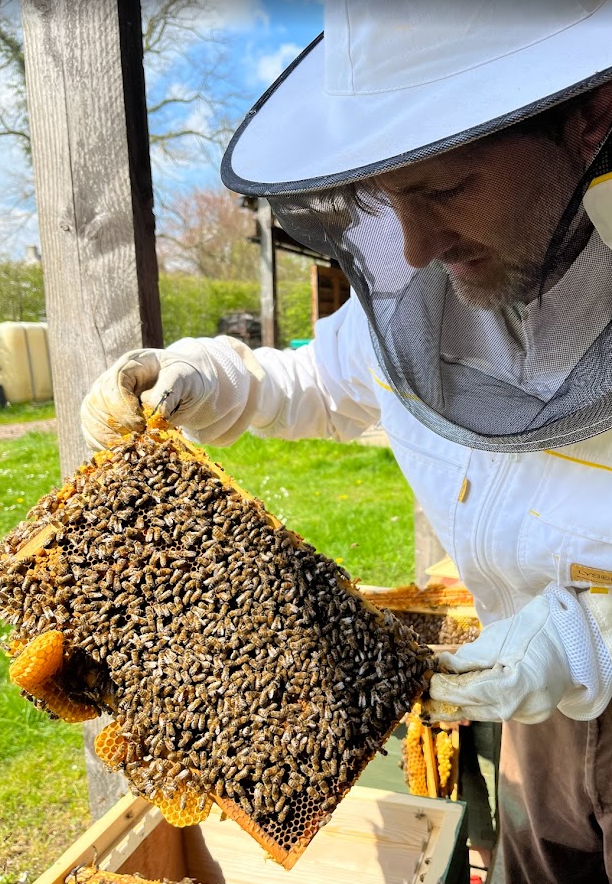
At Smissenbroek, we manage between 6 and 8 beehives and produce between 50 and 80 kilos of honey every year. We harvest once in late Spring and once early in the Summer. We produce an “all-flower honey” as we thrive to maintain and develop the biodiversity of the garden, the park and the agriculture.
Go Carnicas
The Carniolan honey bee, or Apis mellifera carnica, is a popular European subspecies of honey bee known for its gentle temperament and exceptional foraging efficiency.
Appearance
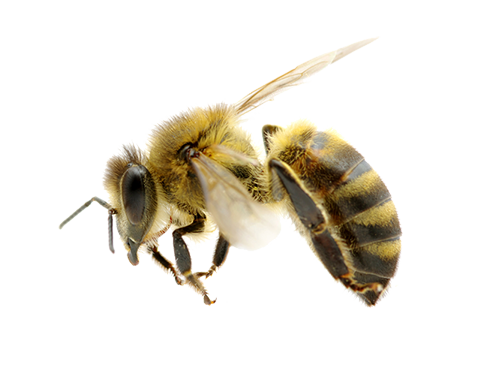
Color: Dusky gray to dark brown-gray with lighter brown or gray bands, earning them the nickname the "grey bee".
Body: Slimmer abdomen than Western European black bees, with a medium size comparable to Italian bees.
Tongue: Exceptionally long tongue (6.5 to 6.7 mm), making them very effective at gathering nectar from clover.
Key Behaviors and Traits
The Carniolan honey bee exhibits a highly cooperative and gentle temperament, remaining calm and docile on the comb, which makes them exceptionally easy for beginners and hobbyists to handle. They are characterized by a rapid spring buildup, quickly exploding in population as the weather warms to make immediate use of early nectar flows. This productivity is fueled by their superior foraging ability; they work tirelessly from early morning to late evening and will even venture out in cool, damp weather when other bee species remain inside the hive.
When the seasons change, their excellent winter economy allows them to form highly efficient winter clusters that conserve food stores remarkably well through the cold months. However, their rapid population growth comes with a strong swarming tendency. Because they expand so quickly, they can easily crowd their hive and swarm if beekeepers do not proactively manage their space.
What did you just say??
1,000+ flowers per day: A single worker honeybee visits between 500 and 1,000 flowers in a single foraging trip, and can visit several thousand flowers in a day just to fill her honey stomach.
225 beats per second: A honeybee's wings beat approximately 225 to 230 times per second. That rapid movement creates the 230 Hz frequency that produces their signature "buzz."
1/12th of a teaspoon: In her entire lifetime (about 3 to 6 weeks during peak season), a single worker bee produces only about 0.08 grams—or roughly 1/12th of a teaspoon—of honey.
2 million flowers for 1 pound: To produce just 1 pound (450g) of honey, a hive of bees must collect nectar from roughly 2 million flowers.
55,000 miles per pound: To gather enough nectar for that same 1-pound jar of honey, the bees in a colony collectively fly about 55,000 miles (88,000 km)—equivalent to orbiting the Earth more than two times.
15 mph top speed: Honeybees fly at an average speed of 15 to 20 miles per hour (24 to 32 km/h) when flying to a food source, and around 12 mph when returning to the hive fully laden with nectar and pollen.
1,500 to 2,000 eggs daily: During peak spring and summer months, a healthy queen bee can lay between 1,500 and 2,000 eggs per day—a total weight that often exceeds her own body weight.
100 million years of history: Fossil records show that bees have been around for roughly 100 million years, meaning they were pollinating flowering plants during the Cretaceous period alongside dinosaurs.